Rethinking Mobile Tools in Infrastructure Bidding
For a long time, mobile apps for contractors seemed like a luxury rather than a necessity. Many contractors relied on traditional methods like paper notes, spreadsheets, and desktop ERPs to manage their projects. These methods worked well enough in the past, so why change?
However, the landscape of infrastructure projects is evolving. With increasing investments in infrastructure, such as Pennsylvania’s 12-Year Transportation Plan, which includes significant funding for roads, bridges, rail, and public transit, competition among contractors has intensified. Meeting strict requirements for detailed and accurate submissions, along with tight deadlines, has become more critical than ever.
The Challenges of Traditional Methods
Traditional methods, while familiar, often lead to inefficiencies. For example, gathering survey data on-site and then manually entering it into an ERP system can take days. This delay can put contractors at a disadvantage, especially when competitors are able to submit their bids faster and with greater accuracy.
Additionally, manual processes are prone to errors, which can result in rework, wasted resources, and missed opportunities. In a fast-paced industry, these inefficiencies can be costly.
The Case for Mobile Tools
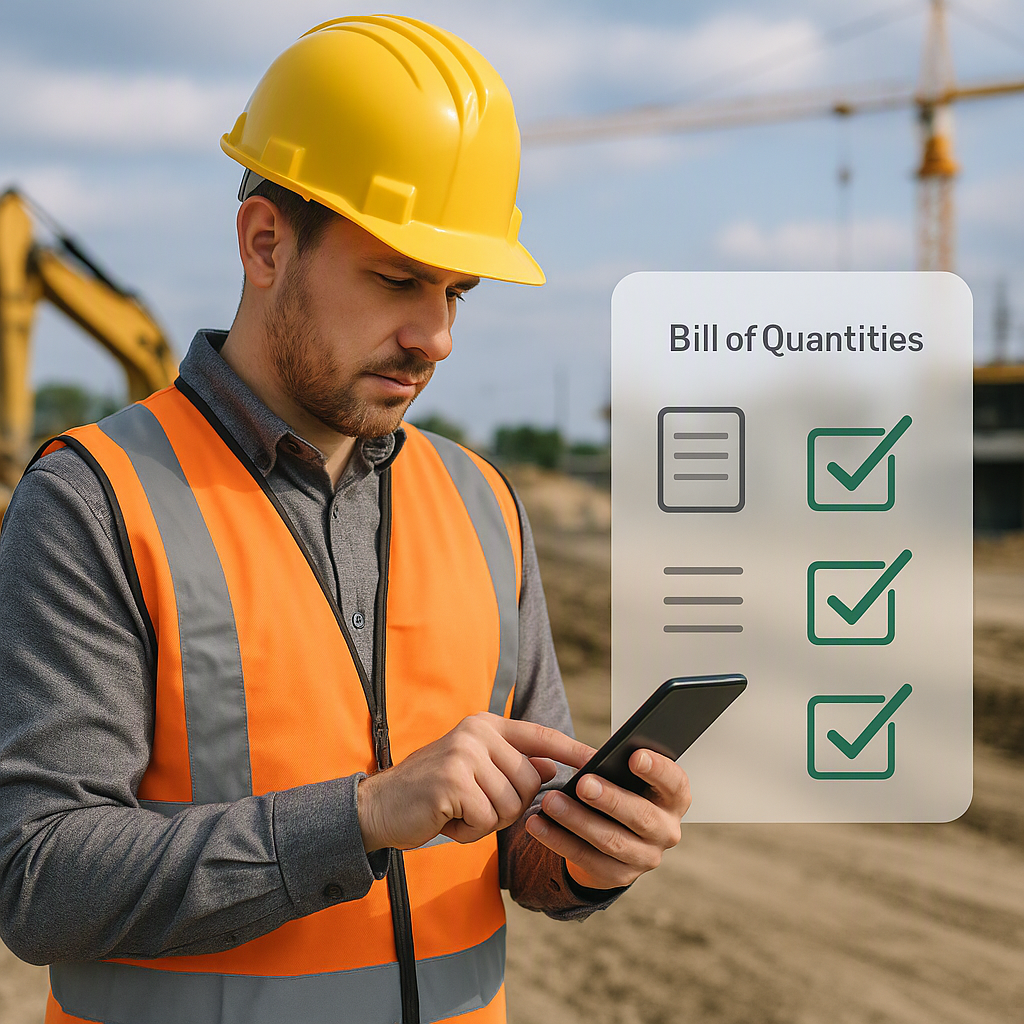
Mobile tools are designed to address these challenges by streamlining processes and improving accuracy. For instance, a mobile app with a site survey module can enable field teams to capture scope details, material requirements, compliance data, and photos directly on-site. This data can then sync instantly with an ERP system, eliminating the lag between fieldwork and office processing.
Illustrative example —
Imagine a contractor surveying a bridge repair project. Using a mobile tool, they can log quantities for materials like steel and concrete, attach photos, and complete safety checklists directly on-site. Once synced, this data is immediately available for office teams to review and use in generating a BOQ (Bill of Quantities). This streamlined process can save significant time and reduce errors.
Overcoming Barriers to Adoption
Despite the benefits, some contractors may hesitate to adopt mobile tools due to concerns about connectivity issues, app reliability, or the learning curve for new technology. While these concerns are valid, many modern tools are designed with features like offline functionality and user-friendly interfaces to address these challenges.
The key is to choose the right tool that aligns with your team’s needs and to invest time in proper training and onboarding. Over time, the efficiency gains can outweigh the initial effort required to adapt.
Conclusion
The infrastructure industry is moving faster than ever, and traditional methods may no longer suffice in meeting the demands of modern projects. Mobile tools offer a way to improve efficiency, accuracy, and competitiveness in the bidding process. While not all tools are created equal, the right solution can be a valuable asset for contractors looking to succeed in today’s challenging market.
Call to Action
If you’re looking to improve your bidding process and stay competitive in today’s fast-paced infrastructure market, consider exploring mobile tools that can help streamline your operations and enhance accuracy.
Learn more at JobNext.ai - Construction ERP