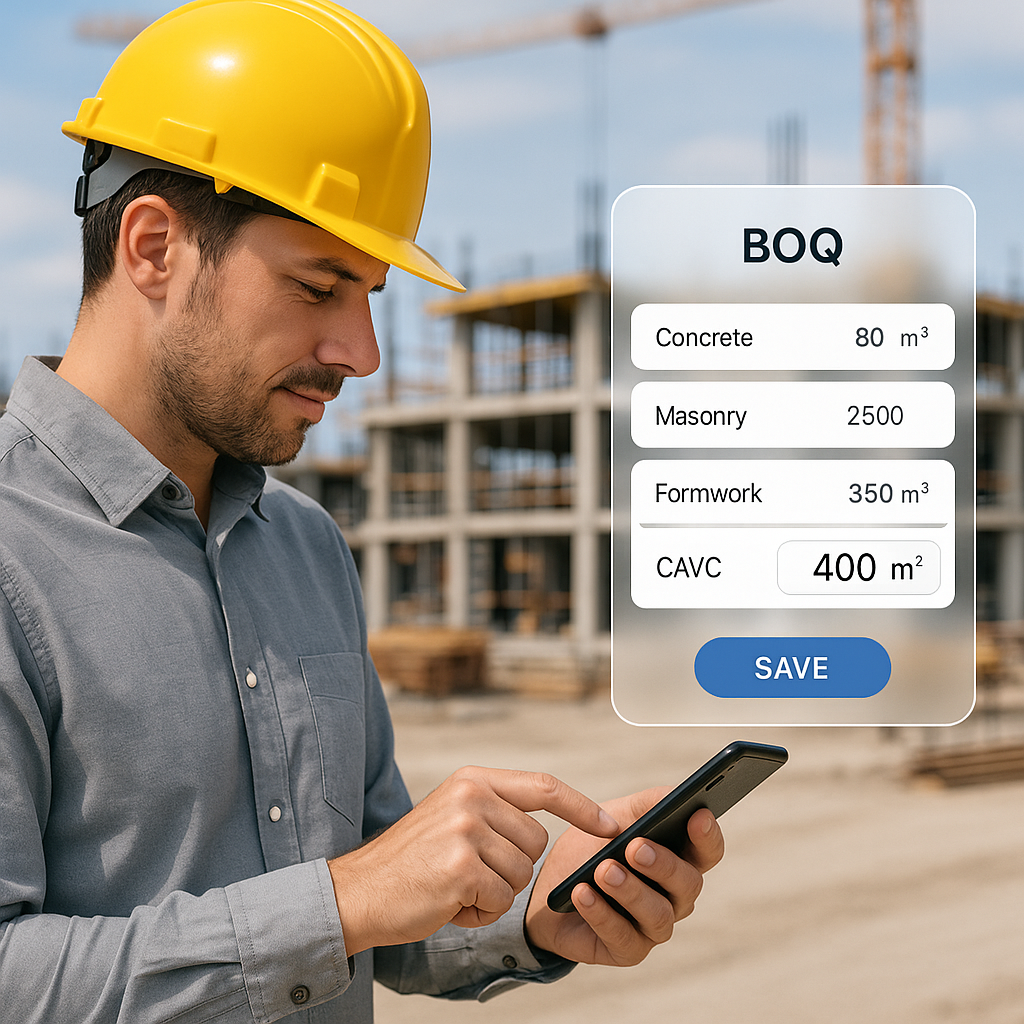
Your BOQ Process Is Costing You Bids
Let’s cut to it: if you’re still building BOQs (Bill of Quantities) at the office, you’re already behind. The moment you leave a site and head back to your desk, the scope is already stale. By the time you’ve entered data into your ERP (Enterprise Resource Planning system), revisions and clarifications are piling up. What’s worse? Your competitors are likely submitting their bids faster and with more accuracy.
Take a recent example from a contractor we spoke to. Their sales rep visited a site on Monday, manually noted down the scope, and returned to the office to build the BOQ. The process took four days. By Friday, the client had already awarded the job to someone else. Why? Because their competitor submitted a detailed, clean bid within 24 hours. This isn’t a one-off story — it’s the norm.
The Key Problem: Disconnect Between Field and Office
Here’s the harsh reality: the construction industry still clings to manual, fragmented processes. Scope details are scribbled on paper or typed into WhatsApp. Photos are taken on phones and emailed later. BOQs are built in spreadsheets that don’t sync with your ERP. All of this adds up to delays, errors, and frustration.
You might think, "We’ve always done it this way, and it works." But does it? Let’s break it down:
- Missed Opportunities: How many bids have you lost because you couldn’t turn around a proposal fast enough? Competitors who submit faster bids often win by default.
- Scope Changes: How often has a last-minute scope change caused chaos during a preconstruction meeting? Showing up with outdated or incomplete BOQs makes you look unprepared.
- Human Errors: Manual data entry increases the risk of mistakes — missed line items, incorrect quantities, or mismatched versions can eat into your margins.
If you’re experiencing even a 10% failure rate because of these issues, you’re leaving significant revenue on the table.
Real-Time BOQs: The Fix You’ve Been Avoiding
This is where real-time tools like BidNext come in. Imagine this instead: your field team builds the BOQ directly at the site. Line items, quantities, and rates are entered on their phone while the scope is still fresh. Need to attach a photo of the area? Snap it and upload it directly to the BOQ. Adjustments? No problem — everything syncs instantly with the ERP.
A Real-World Case Study
One contractor we consulted implemented BidNext’s Enquiry & BOQ Builder. Here’s what happened:
- Before: They took 3-5 days to complete a BOQ due to back-and-forth communication between field and office teams. Errors in quantities were common, often leading to margin losses.
- After: By using BidNext, their field team created BOQs directly on-site. The turnaround time for quotes dropped to 6 hours on average. Their win rate improved by 18% within three months.
Key Features of Real-Time Tools
- Instant Syncing: Changes made on-site are reflected in real time, eliminating double entry and version mismatches.
- Photo Attachments: Snap photos of site conditions and attach them directly to BOQ line items.
- ERP Integration: Everything syncs with your existing ERP for seamless workflows.
According to a 2022 McKinsey report on construction technology, companies that adopt real-time tools see a 20-25% reduction in preconstruction delays.
Why Speed Isn’t the Only Advantage
Let’s talk accuracy. Every contractor knows errors in BOQs can kill your margins. A missed line item or incorrect quantity can cost you lakhs over the course of a project. Building the BOQ on-site reduces these risks significantly. You’re working with real-time data, not memory or assumptions.
Common Errors Reduced by Real-Time BOQs
| Problem | Manual BOQs | Real-Time BOQs |
|---|---|---|
| Missed Line Items | High Risk | Significantly Reduced |
| Incorrect Quantities | Common | Rare |
| Version Mismatches | Frequent | Eliminated |
| Delayed Turnaround | 3-5 Days | Hours |
In one example, a contractor avoided a ₹5 lakh loss by catching a missed scope item during on-site BOQ creation.
Real-time BOQs also solve another common issue: preconstruction meeting chaos. How many times have you walked into a meeting only to realize the BOQ doesn’t reflect the latest changes? Now the client is frustrated, and you look unprepared. With tools like BidNext, those updates are already there. No scrambling, no excuses.
Common Objections (And Why They Don’t Hold Up)
You might be thinking, "We don’t need another tool." Let’s address that:
Objection 1: "We’ve Always Done It This Way"
The truth is, traditional methods worked in a slower market. Today, speed and accuracy win bids. If you’re not adopting tools to improve, your competitors will — and they’ll win.
Objection 2: "It’s Too Expensive"
Real-time tools like BidNext aren’t expenses; they’re investments. Let’s do the math:
- If you’re losing just two ₹10 lakh projects per year due to process delays, that’s ₹20 lakh in lost revenue.
- Tools like BidNext cost a fraction of that, and the ROI is immediate.
Objection 3: "Our Team Won’t Adapt"
Start small. Train one team to use the tool during site visits. Once they see how much easier and faster it is, adoption will spread organically.
Making the Shift to Real-Time Preconstruction
Changing your process doesn’t have to be overwhelming. Start small:
- Equip Your Field Team: Provide them with mobile tools like BidNext.
- Train for On-Site BOQs: Teach them to build BOQs on-site during surveys.
- Sync with Your ERP: Ensure the tool integrates seamlessly with your current system.
Actionable Steps
- Audit Your Current Process: How many hours are you spending on manual BOQs? Where are the bottlenecks?
- Choose the Right Tool: Look for features like real-time syncing, photo attachments, and ERP integration.
- Pilot the Change: Start with one project or team. Measure the time and cost savings.
- Scale Gradually: Roll out the tool to other teams once you see success.
Final Thoughts
Winning bids in today’s market isn’t just about pricing. It’s about reliability, speed, and professionalism. Real-time BOQ tools are no longer optional if you want to stay competitive. Contractors who adapt will win more jobs — it’s that simple.
If you’re tired of losing bids due to outdated processes, BidNext can help. Get started free →
: McKinsey & Company, "The Next Normal in Construction," 2022.: Feedback from BidNext user group, 2023.
Learn more at JobNext.ai - Construction ERP