When it comes to construction bidding, speed isn't optional. It's survival. Every contractor knows this: the longer you take to respond to a request, the more likely the client moves on. But let's talk specifics. If you're taking 3-5 days to send a quote, you're practically handing the job to your competitors.
Why Quoting Speed Matters
Think about it. A potential client asks you for pricing. They’re juggling multiple bids, tight timelines, and probably a bit of stress. If your quote lands in their inbox first, you’ve instantly created a favorable impression. You seem proactive, organized, and easy to work with. But if you're late? You're just another email in their overflowing inbox. The opportunity might already be gone.
According to industry studies, contractors who respond to bids within 24 hours are 57% more likely to win the job compared to those who take longer (Construction Executive). Why? Because responsiveness builds trust. And trust closes deals.
The Problem with Traditional Quoting
Here’s how quoting usually works: your field team collects data from the site — scope, materials, manpower, maybe some photos. Then they relay it back to the office. Someone manually inputs the data into your ERP, builds a BOQ, generates a PDF, and emails it to the client. Best case? This takes 3 days. Worst case? A week.
Now multiply that by 10 active bids. Or 20. It adds up fast.
And let’s be honest — the process is riddled with inefficiencies. Field reps forget details. Handwritten notes get lost. Data entry errors creep in. Meanwhile, the client is waiting. And waiting.
A Faster Way: Real-Time Quoting On-Site
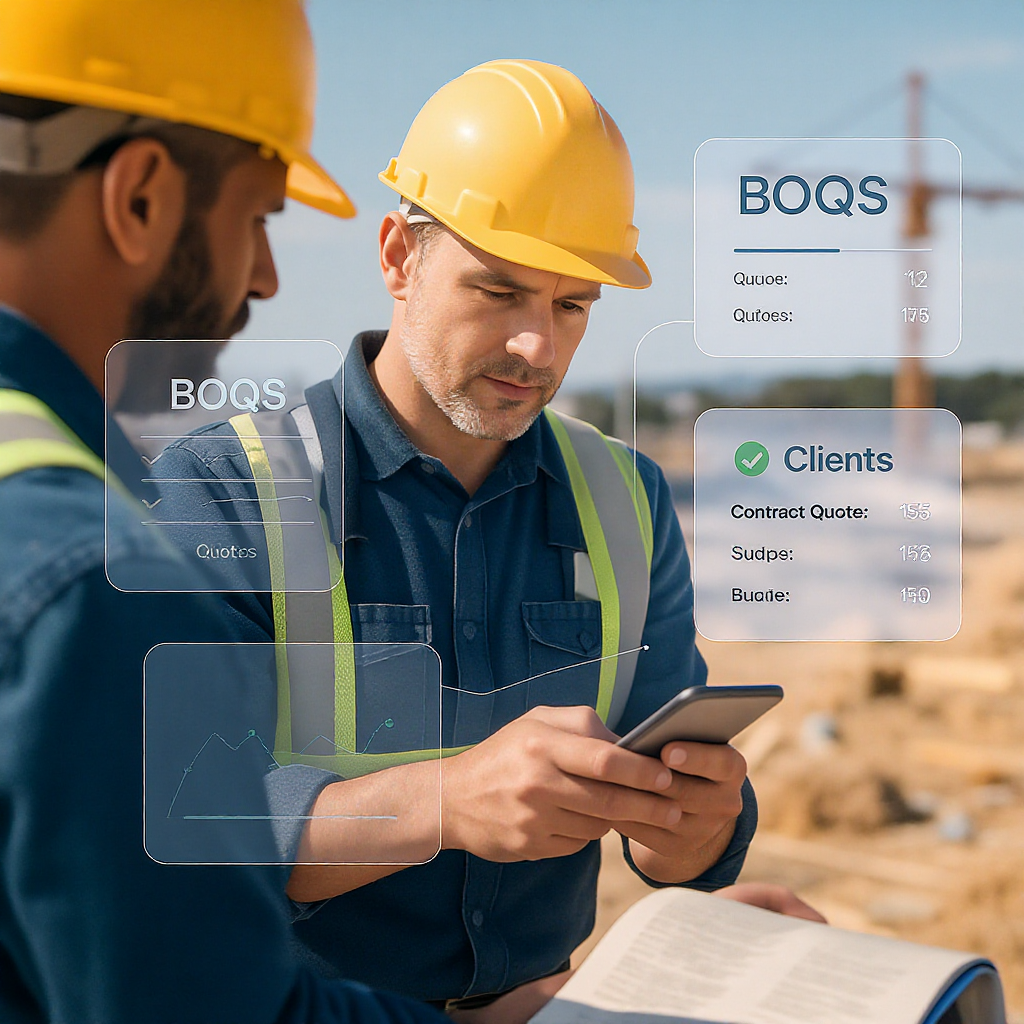
Here’s where BidNext flips the script. With its Quick Quoting feature, your field team can generate a complete, client-ready quote directly from the job site. No back-and-forth with the office. No delays.
How does it work? During a site visit, your team uses the app to:
- Build a Bill of Quantities (BOQ) line by line, complete with quantities, rates, and classifications.
- Capture photos and attach them directly to the enquiry.
- Apply pricing, margins, and terms — all pre-configured in JobNext ERP.
Once the quote is ready, they can submit it for approval (if required) and download a PDF to email or share instantly. The entire process takes hours, not days.
This isn’t just theory. We’ve seen contractors cut their quoting time by 60% using BidNext. That’s the difference between being the first bid on the client’s desk and being forgotten.
The Hidden Costs of Being Slow
You might think, “What’s a few extra days?” Here’s the thing: slow quoting doesn’t just cost you jobs. It costs your reputation. Clients notice when you’re late. They might not say it, but they’re thinking, If they’re this slow at quoting, how will they handle the actual project?
And it’s not just perception. A slow process ties up your team, creates bottlenecks, and increases overhead. Every time you re-enter data or chase approvals, you’re burning time and money. Multiply that by hundreds of quotes a year, and the inefficiencies become staggering.
As JobNext’s blog on field-to-office connectivity points out, real-time tools eliminate these blind spots, keeping your preconstruction pipeline moving seamlessly.
Closing the Gap
If you’re still relying on spreadsheets, paper notes, or outdated systems, you’re already behind. Clients demand speed, accuracy, and responsiveness. Tools like BidNext aren’t just “nice to have” — they’re how you stay competitive in a market where every second counts.
So, the next time you’re preparing a quote, ask yourself: How fast can I get this out? If the answer isn’t “today,” it’s time to rethink your process.
Ready to see BidNext in action?
Companion mobile app to JobNext giving contractors the ability to bid for jobs on the go.
Get Started Free →Learn more at JobNext.ai - Construction ERP