Why Most Tenders Fail Before They Even Start
Here’s a stat that should make you uncomfortable: 44% of contractors admit their tender responses miss the mark because of incomplete or rushed Bill of Quantities (BOQs). Think about it. If the BOQ—the backbone of any proposal—is flawed, how can the rest of the tender hold up?
What’s the usual culprit? Most contractors rely on desktop ERPs to build their BOQs. That means survey data gets scribbled on paper or snapped in photos, only to be manually entered later. Errors creep in. Deadlines get tight. And by the time your quote reaches the client, someone else has already won their trust.
This isn’t just theory. A 2021 study by McKinsey found that construction projects lose up to 30% of their value due to inefficiencies in processes, including tender preparation. That’s millions left on the table every year.
We’ve seen this story play out too many times. But here’s the good news: it doesn’t have to.
The Problem With Traditional BOQ Processes
Let’s break it down:
- Paper surveys are unreliable: You jot down measurements on-site, but later, you can’t read your handwriting or forget why you noted something. Critical details go missing.
- Data silos slow you down: Photos, notes, and Excel sheets are scattered across devices. Pulling them together takes hours—or days.
- Desktop-first ERPs waste time: You’ve got to return to the office, re-enter everything, and hope you didn’t miss a decimal.
The result? A BOQ that’s either rushed or late. Neither inspires confidence in your client. Worse, inaccuracies in your BOQ can lead to underbidding or overbidding. Underbidding might win you the tender, but it sets you up for losses. Overbidding, on the other hand, takes you out of the running entirely. It’s a lose-lose situation.
Actionable Fix: Rethink How You Collect Data
Instead of using paper and desktop tools, switch to mobile-first platforms. These tools let you:
- Capture data directly on-site: No middle steps. No duplicates.
- Organize everything in one place: Photos, notes, and measurements are linked to specific BOQ items.
- Reduce human error: Integrated checks and validations flag mistakes before they snowball.
BOQ Building On-Site: Why It Matters
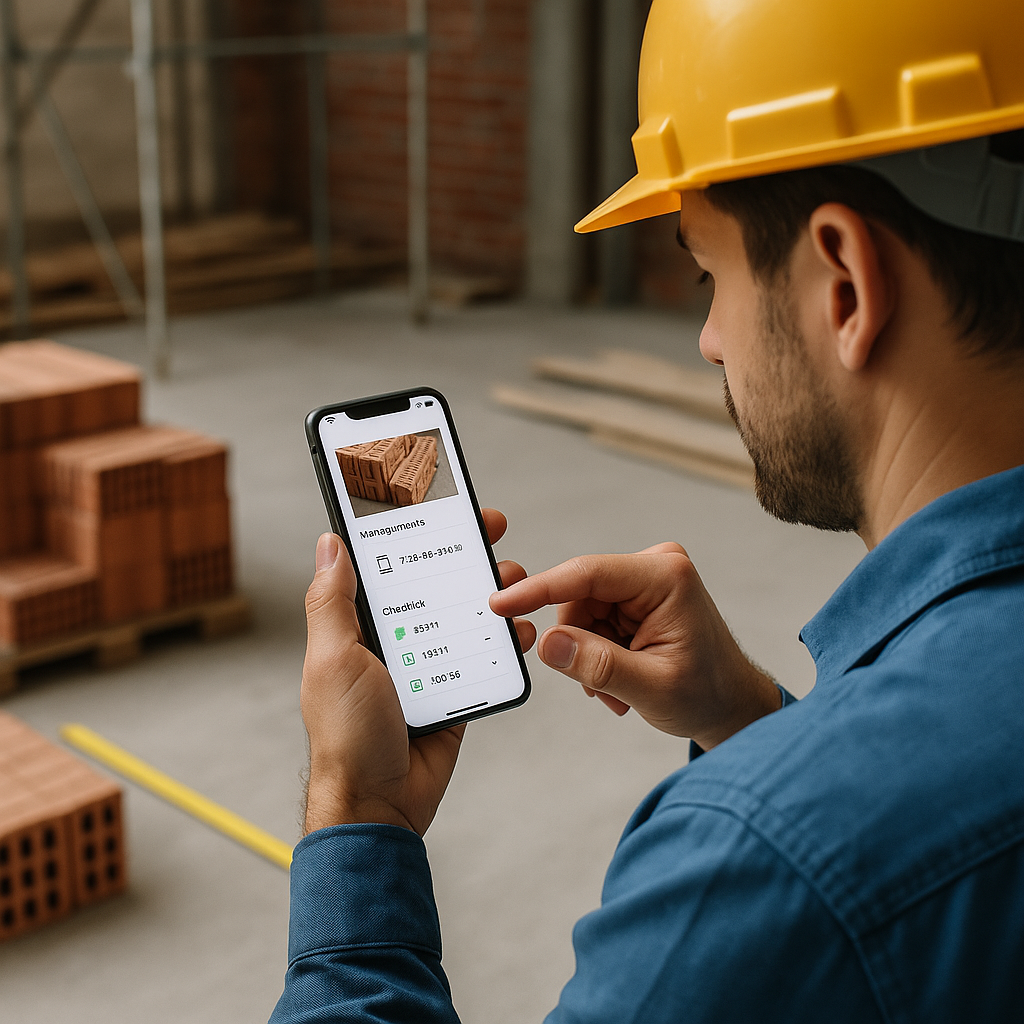
Imagine this: You’re walking a site, gathering scope details, and planning materials. Instead of scribbling notes, you open the BidNext app. You:
- Add BOQ items line by line with quantities, rates, and classifications.
- Attach photos directly to each item for visual context.
- Mark materials and manpower needs in real-time.
By the time you leave the site, your BOQ is 90% complete and synced to JobNext ERP. No re-keying. No delays. Just accurate data ready for quoting.
This isn’t theoretical. Contractors using BidNext have cut their BOQ preparation time by over 50%. That’s hours saved on every tender. If you’re preparing 10 tenders a month, you’re saving close to 40 hours—an entire workweek.
Concrete Example: What This Looks Like in Practice
Let’s say you’re a plumbing contractor bidding for a residential project. During your site visit, you:
- Spot a unique piping requirement due to the building’s layout.
- Snap a photo, upload it to the app, and link it to the corresponding BOQ item.
- Add notes about the custom fittings required.
When you finalize the BOQ, this context is already embedded, making your proposal far more credible than a generic one.
Real-World Impact: A Case Study
Take a mid-sized MEP contractor we worked with in Mumbai. Their team used to spend 3-4 days moving site data into their ERP. By the time quotes went out, they were already losing deals. After adopting BidNext, they:
- Captured BOQs on-site, reducing data entry errors by 80%.
- Cut quoting turnaround from 4 days to 8 hours.
- Increased tender win rates by 25% in one quarter.
Another Case Study: Infrastructure Contractor in Dubai
A Dubai-based contractor specializing in road construction faced a similar issue. Their BOQs often lacked the granularity clients expected. After switching to a mobile-first approach, they:
- Reduced their error rate to less than 2%.
- Won a $4 million contract due to the detailed and visually supported BOQ submitted.
Why Context Matters in Tender Responses
Clients don’t just want numbers; they want proof you’ve understood their needs. With BidNext, your BOQ isn’t just a list of items. It’s a data-driven narrative:
- Photos and notes show exactly what you observed.
- Classifications like UOM (Unit of Measurement) and BOQ type add depth.
- Integrated QHSE compliance demonstrates you’re serious about safety.
Actionable Tip: Build a BOQ That Tells a Story
When preparing your BOQ, think of it as a story, not just a spreadsheet. Here’s how:
- Use visuals: Attach photos for every key observation.
- Add context: Include notes explaining why certain materials or methods are chosen.
- Highlight differentiators: If your process or materials offer a cost or time advantage, call it out.
Addressing Common Objections
You might be thinking: “This sounds great, but what if I lose connectivity on-site?”
Objection 1: "What If There's No Internet?"
BidNext has you covered. Its offline-ready architecture lets you work without internet access. Data syncs automatically once you’re back online. No gaps. No excuses.
Objection 2: "Doesn’t This Require Training?"
Not really. If you know how to use a smartphone, you’re set. Most contractors onboard their teams in under a day. BidNext’s intuitive interface ensures even technophobes can adapt quickly.
Objection 3: "What About Cost?"
Think of it this way: How much are you losing on inefficient processes and missed tenders? Contractors report seeing ROI within the first three months of using BidNext.
How BidNext Fits Into the Bigger Picture
Building BOQs on-site is just one piece of the puzzle. To see the full picture, check out ₹1.2 Crore Lost to Manual Subcontractor Tracking: Why FOUNDATION ERP Fails Contractors in India & GCC. It highlights how preconstruction inefficiencies bleed money—and how tools like BidNext and JobNext ERP fix them.
Decision Framework: Should You Switch to On-Site BOQ Building?
| Question | Yes | No |
|---|---|---|
| Do you regularly face tender delays? | BidNext can cut your preparation time in half. | If your current system works perfectly and you never miss deadlines, you might not need it. |
| Do errors in your BOQs cost you deals? | BidNext reduces data entry errors by up to 80%. | If your team already has a flawless process, you might stick with it. |
| Are clients asking for more detail? | BidNext’s photos, notes, and classifications make your BOQs stand out. | If your clients are satisfied with minimal detail, this may not be a priority. |
| Do you want to improve win rates? | Contractors using BidNext have reported a 25% improvement in tender wins. | If you’re already winning most of your tenders, this might not be a concern. |
Final Thoughts
Winning tenders isn’t about being the cheapest. It’s about being the most reliable. That starts with a BOQ that’s accurate, detailed, and timely. BidNext makes that possible.
If slow BOQs are costing you deals, it’s time to rethink your process. Get started free →
Learn more at JobNext.ai - Construction ERP