Procore to Buy DroneDeploy for $845M: Why This Matters for Contractors
When Procore announced its plan to acquire DroneDeploy for $845 million, the construction world took notice. Why? Because it’s not just a big deal—it’s a clear sign of where the industry is headed: automation, data, and real-time decision-making. Drones aren’t just for aerial shots anymore; they’re becoming an integral part of construction workflows, from site surveys to progress tracking.
But here’s the kicker: even the smartest drone data won’t fix everything. Why? Because the problem isn’t just about gathering data—it’s about acting on it. That’s where most contractors hit a wall. So, how do you make sure the data you’re collecting actually translates into better decisions, faster bidding, and fewer mistakes?
Let’s talk about how you can future-proof your business, with or without drones.
The Data Deluge is Coming
If you’ve been in construction for a while, you’ve seen how technology has exploded onto job sites in the last decade. What started with GPS systems and basic project management tools has evolved into drones, AI, and IoT sensors. A report from McKinsey & Company predicts that digital adoption in construction is set to grow exponentially by 2025, with tech like drones and real-time data platforms leading the charge.
DroneDeploy, for example, specializes in aerial mapping and analytics. Their software can create detailed 3D site models, track progress, and even identify safety risks. Combine that with Procore’s project management platform, and you’ve got a potential powerhouse for jobsite data integration.
But here’s the question: How do you make sure your field teams are ready to use this data effectively?
Actionable Steps to Prepare for the Data Deluge
- Invest in Training: Ensure your field teams know how to interpret drone-generated reports, 3D models, and other data outputs. Without proper training, expensive tools become underutilized assets.
- Create a Data Workflow: Establish a clear process for collecting, analyzing, and acting on the data. For example:
- Who reviews the drone data?
- How is it communicated to the field team?
- What steps are taken to address flagged issues?
- Leverage Software Integration: Use platforms that sync data across devices, like DroneDeploy integrating with Procore or apps like BidNext that tie into your ERP system. This ensures everyone has access to updated information in real time.
The Real Bottleneck: Field Team Efficiency
Let’s be real. The weak link in most construction workflows isn’t the tech—it’s the gap between the field and the office. Drones can capture incredible amounts of data in minutes, but what happens next? If your field team can’t act on that data in real time, you’re still stuck in the same old cycle of delays, rework, and missed opportunities.
Here’s a common example: A drone survey identifies a potential issue with a foundation. Great. But if your field supervisors don’t have a seamless way to update the scope of work (SOW) and communicate it to the office, it’s just another disconnected insight. The delay in translating that insight into action can cost you days—or worse, your margins.
How to Improve Field Team Efficiency
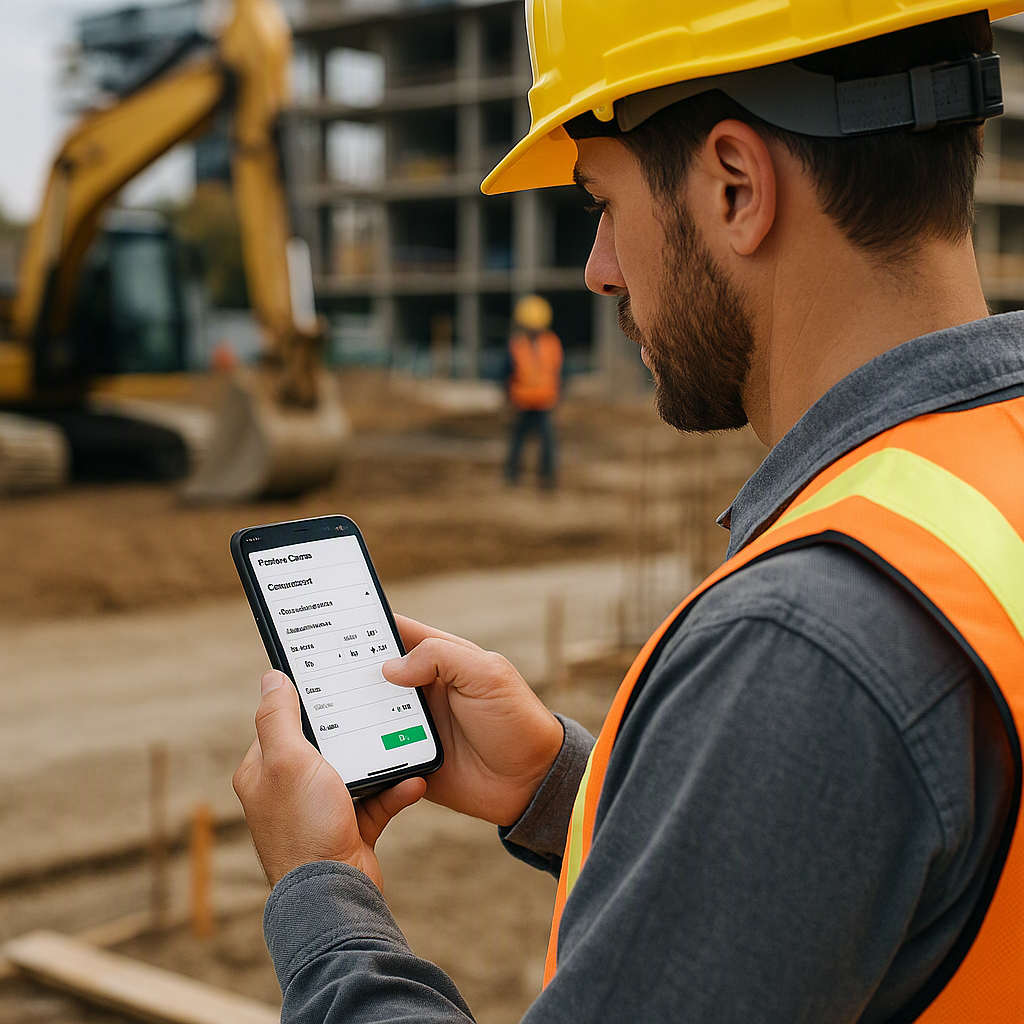
- Equip Teams with Mobile Tools: Give your field teams access to apps that allow them to update SOWs, upload photos, and share progress in real time. For instance, BidNext’s Site Survey Module allows field supervisors to instantly sync updates with the office.
- Standardize Communication: Implement standardized formats for site updates, such as templates for reporting issues or summarizing progress. This reduces the risk of miscommunication.
- Close the Feedback Loop: Don’t just push data from the office to the field—make sure field teams can also provide actionable feedback that informs decision-making at higher levels.
Why Real-Time BOQs Are Non-Negotiable
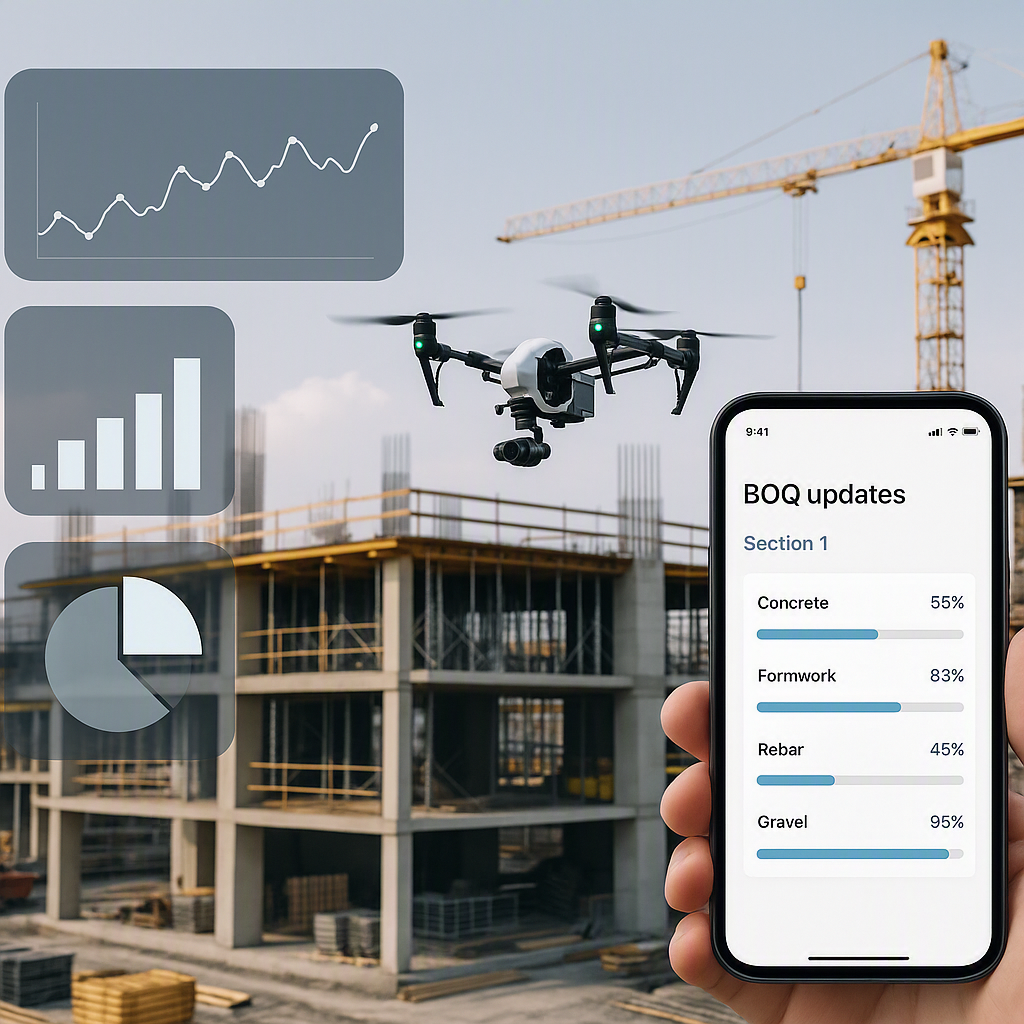
The DroneDeploy acquisition also highlights another key trend: the growing importance of accurate, real-time Bill of Quantities (BOQs). As drones make site surveys faster, the pressure to turn that data into actionable BOQs will only increase.
Here’s the problem. Most contractors still build BOQs manually, back at the office. They take notes on-site, snap a few photos, and then spend hours reconciling everything later. It’s slow, error-prone, and—let’s face it—outdated. In a world where your competitors are using drone-powered platforms like DroneDeploy, this process won’t cut it anymore.
Steps to Transition to Real-Time BOQs
- Adopt Mobile BOQ Tools: Use software that allows BOQs to be built on-site. Apps like BidNext make this possible by letting field teams add quantities, rates, and classifications directly from the job site.
- Automate Data Input: Integrate drone data directly into your estimating tools. For example, if DroneDeploy provides volumetric data for excavation, your BOQ tool should automatically calculate the quantities needed.
- Sync with Your ERP: Ensure that BOQs are instantly synced with your ERP system so all stakeholders—estimators, project managers, clients—have access to the same accurate data.
By implementing these steps, contractors can not only speed up tender responses but also improve their accuracy, reducing the risk of underbidding or overestimating.
Comparison Table: Traditional vs. Real-Time Workflows
| Aspect | Traditional Workflow | Real-Time Workflow |
|---|---|---|
| Data Collection | Manual site surveys, paper notes | Drone surveys, mobile apps |
| BOQ Creation | Built manually at the office | Created on-site with mobile tools |
| Communication | Delayed updates via email/phone calls | Instant updates synced across platforms |
| Response Time | Days to weeks | Minutes to hours |
| Error Rate | High due to manual input | Lower due to automated workflows |
What’s Next for Contractors?
Procore’s move underscores a simple reality: the future of construction is in the field. The days of relying on desktop-based tools and weekly progress reports are over. The firms that will thrive in this new era are the ones that can:
- Integrate new tech seamlessly: Whether it’s drones or a mobile app like BidNext, the key is making sure your tools talk to each other.
- Empower field teams: Give them the tools they need to act on data in real time. This isn’t just about efficiency—it’s about staying competitive.
- Close the loop: Data is only valuable if it leads to action. Make sure your workflows are designed to turn insights into results, fast.
Learn more at JobNext.ai - Construction ERP