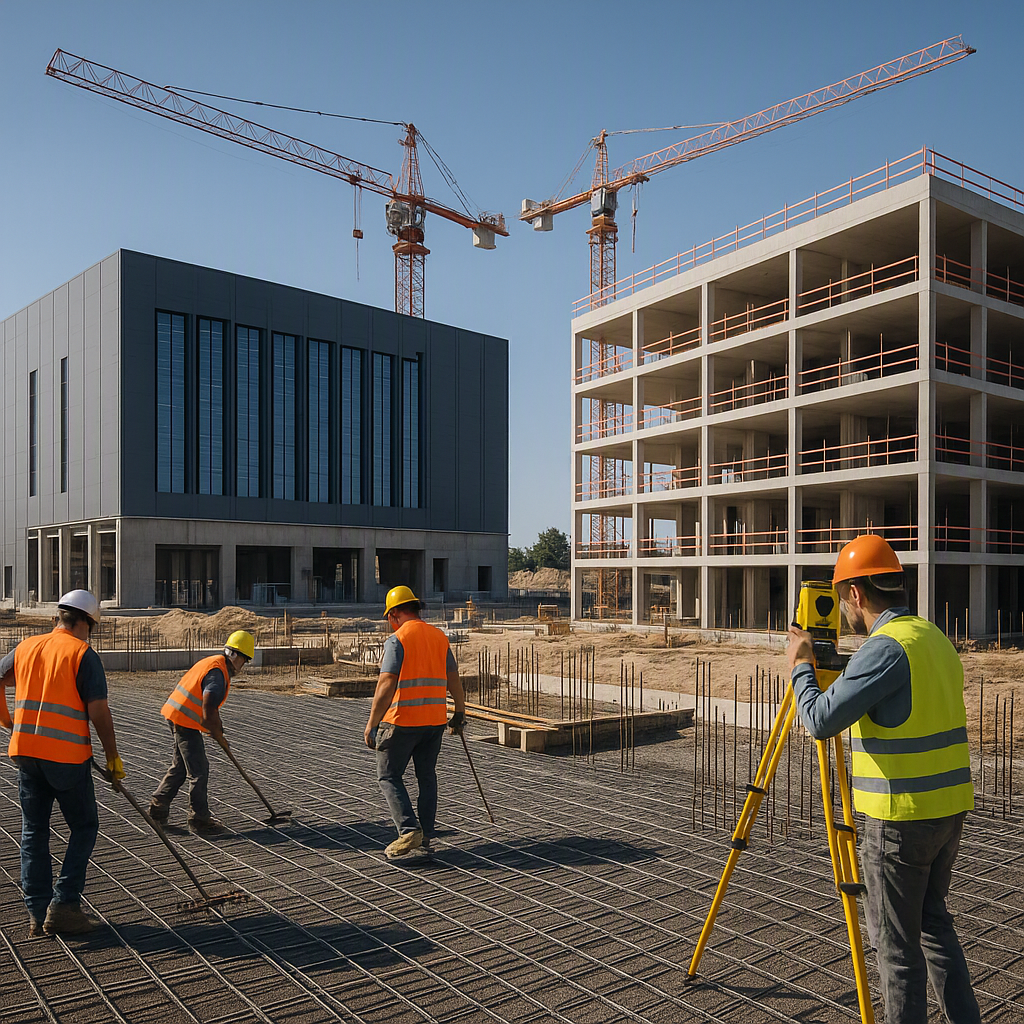
I Used to Blame Field Teams for Preconstruction Delays
If you asked me a year ago why contractors struggle with preconstruction, I’d have said it’s the field teams. Too slow to respond, too disorganized, too reliant on paper surveys and WhatsApp messages. I thought field teams were the bottleneck. And I wasn’t alone in this belief. Many contractors I worked with had the same complaints: "We can't get accurate data from the site," "Survey information is always late," "Field teams don’t follow up on prospects in time."
It seemed obvious. If the data from the site takes days to reach the office, and quotes take even longer to go out, then field teams must be the weak link. Right?
The Moment That Changed My Perspective
What changed my mind wasn’t a study or a report—it was a conversation. Last year, I sat down with a contractor who was losing bids left and right. He was frustrated, and after half an hour of venting about his field teams, he pulled out his laptop to show me his process.
Here’s what I saw: survey reports emailed as PDFs, BOQs built in Excel, approvals managed via phone calls, and quote generation tied to a desktop ERP system. It took him three to five days to turn a site visit into a submitted quote. And this wasn’t because his field team was slow—it was because they didn’t have the right tools.
The contractor admitted, "Even if my guys sent me survey data the same day, I’d still need two days to pull it all together and send the quote." That’s when it clicked for me. The problem wasn’t the field teams. The problem was the system.
Why the Old Belief Persisted
It’s easy to blame field teams because they’re visible. When a prospect goes cold or a bid is lost, the first question is often, "What went wrong on-site?" It’s harder to look at the invisible processes—the data silos, the disconnected tools, the manual workflows.
Systemic Issues That Lead to Blame
-
Paper-Based Workflows: Field teams often rely on paper-based surveys to capture crucial site details. These forms must be scanned, emailed, and manually entered into office systems. Any delay in this process creates a bottleneck.
- Paper forms are prone to damage, loss, or illegibility, which further complicates the data transfer.
- Manual data entry increases the risk of errors, leading to mismatched BOQs and inaccurate quotes.
-
Siloed Tools: Many contractors use a combination of disconnected tools—Excel for BOQs, WhatsApp for team communication, email for approvals. These tools don’t talk to each other, so data transfer becomes a slow, error-prone process.
- For example, an Excel BOQ might need to be manually re-entered into a desktop ERP, creating duplicate work.
- Messaging tools like WhatsApp lack integration with project management systems, leading to fragmented communication.
-
Lack of Real-Time Updates: Without real-time syncing between field and office teams, any updates to scope or pricing have to be communicated manually. This leads to miscommunication and delays.
- Imagine a scenario where a field team discovers additional requirements during a survey but has no way to instantly update the office team—this results in outdated quotes and lost bids.
Why Contractors Avoid Change
Paper surveys, spreadsheets, and desktop systems have been the norm for decades. Contractors often see these processes as "good enough," and switching to new tools feels risky. There’s a fear of downtime, learning curves, and upfront costs, even if the long-term benefits outweigh the initial investment.
- Downtime Concerns: Contractors worry that adopting new tools will slow down operations during the transition.
- Learning Curve: Field teams may resist using unfamiliar technology, especially if they don’t see immediate benefits.
- Upfront Costs: Software solutions often require initial investments, which can deter contractors already operating on tight margins.
What I Do Differently Now
Now, I focus on fixing the system, not blaming the people. When contractors tell me their preconstruction process is too slow, my first question isn’t, "What’s your field team doing wrong?" It’s, "What tools are they using?"
Actionable Steps to Fix the System
-
Digitize BOQ Creation: Tools like BidNext allow field teams to build BOQs directly on-site. Instead of relying on Excel and manual entry, contractors can input quantities, rates, and classifications directly into an app that syncs with the ERP in real time. This eliminates duplicate entry and ensures accuracy.
- Benefits: Faster BOQ creation and reduced errors.
- Example: A team member enters quantities directly into BidNext during a site visit, and the office team sees real-time updates.
-
Automate Survey Data Capture: Replace paper forms with apps that let field teams capture survey data digitally—photos, scope details, materials, and compliance checks. Apps like BidNext sync this data instantly with the office, allowing quote preparation to start the same day.
- Benefits: Immediate access to accurate survey data.
-
Enable Offline Data Entry: Many sites have poor internet connectivity, but tools like BidNext allow offline data capture. Once the team regains connectivity, the data syncs automatically.
- Benefits: Field teams can work uninterrupted, even in remote locations.
-
Streamline Approvals: Instead of relying on phone calls or emails for approvals, adopt software that allows instant approval workflows. This reduces delays caused by back-and-forth communication.
- Benefits: Faster decision-making and fewer missed deadlines.
Comparison Table: Traditional vs. Modern Preconstruction Workflows
| Workflow Stage | Traditional Workflow | Modern Workflow with Tools |
|---|---|---|
| BOQ Creation | Manual entry via Excel; prone to errors | Real-time BOQ creation directly in app |
| Survey Data Capture | Paper forms; delayed data sharing | Digital surveys synced instantly |
| Approvals | Phone calls and emails; slow responses | Automated workflows with notifications |
| Team Communication | WhatsApp groups; disconnected tools | Integrated chat and task management |
| Offline Capability | Limited; requires manual input later | Offline data entry with auto-sync |
What Being Wrong Cost Me
Believing field teams were the problem cost me trust. I wasn’t listening to contractors who told me their teams were doing their best with the tools they had. I also missed opportunities to recommend solutions that could have fixed the real issues.
Even now, I’m not sure I’ve fully shaken the habit of blaming field teams. It’s tempting to look for the human error because it feels actionable. But the truth is, most errors are systemic. If the tools and processes are broken, even the best teams will struggle.
Call to Action
If you're tired of preconstruction delays, BidNext can help. Get started free →
Learn more at JobNext.ai - Construction ERP