The Fastest Way to Lose a Bid? Slow BOQs
When it comes to construction bids, speed matters. A lot. If your quote takes three days to land on a client’s desk, chances are you’re already out of the running. Why? Because someone else—probably a competitor with better tools—sent theirs yesterday.
Here’s the brutal truth: most contractors still use outdated workflows for Bill of Quantities (BOQs). Field teams jot down notes on paper or snap photos on their phones during site surveys. Then, they email the data back to the office, where someone manually re-enters it into the ERP. By the time the quote is generated, reviewed, and sent, days (or even weeks) have passed.
In today’s fast-moving market, that’s just too slow.
Why On-Site BOQs Change the Game
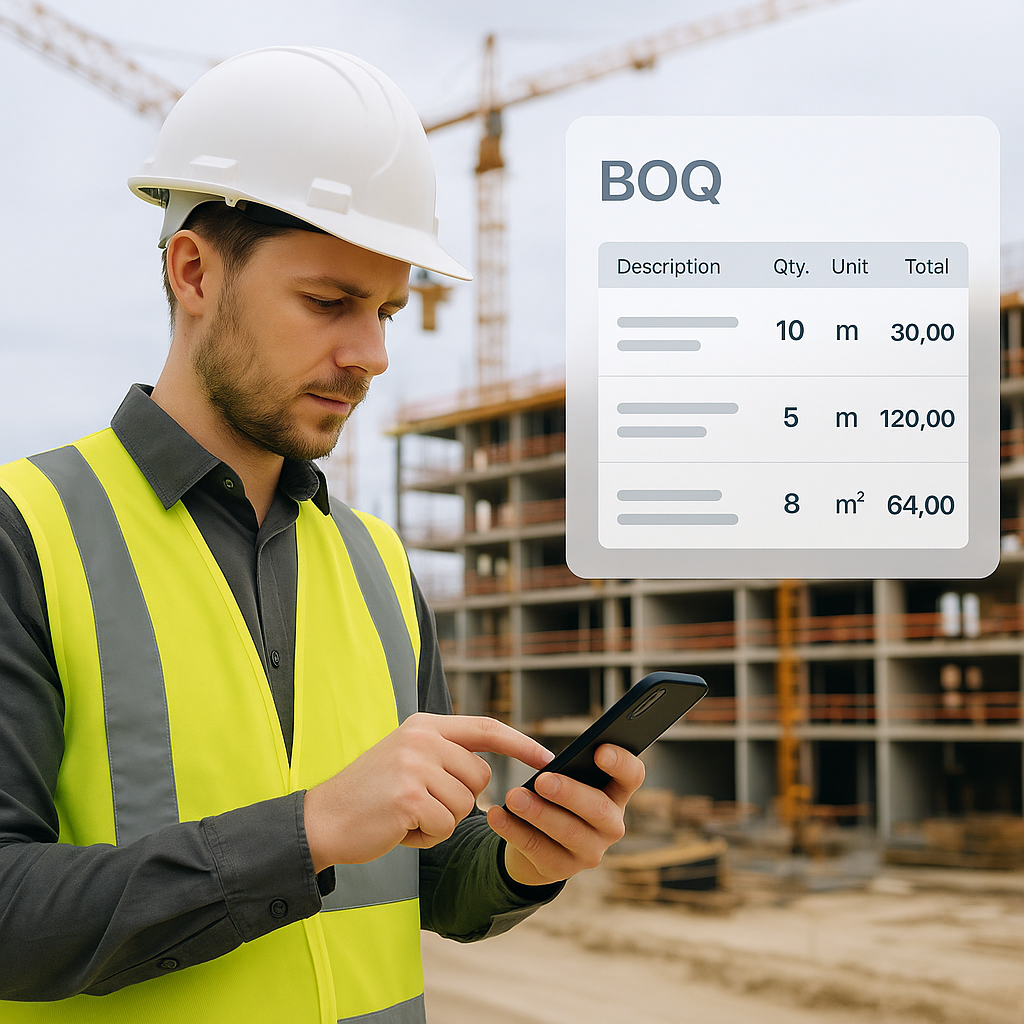
What if you could build your BOQ while you’re still on-site? Imagine this: you’ve just finished walking through a construction site. Instead of scribbling down material requirements or manpower estimates on a notepad, you open an app on your phone. Right there, you input quantities, materials, and unit rates directly into a BOQ builder. By the time you leave the site, the draft is ready.
This isn’t some futuristic dream. It’s how BidNext’s Enquiry & BOQ Builder works. Contractors using BidNext report slashing their quoting time by up to 38% (source).
Here’s what makes it practical:
- Real-Time Data Sync: Everything you input on-site syncs automatically with your JobNext ERP. No manual re-entry, no delays.
- Offline-Ready: Even if you’re in a remote location with no internet, you can still use the app. Data syncs later.
- Complete Accuracy: You’re building the BOQ while the scope is fresh in your mind—no guessing later.
Real-World Example: Interior Fit-Out Contractor
An interior fit-out contractor working on high-end retail projects recently adopted BidNext to streamline their BOQ process. Before, they relied on handwritten notes and Excel sheets, which led to frequent errors and slow turnaround times. After switching to BidNext, they reduced their quoting process from five days to just one. This speed allowed them to win a project with a major retail chain that required a quote within 24 hours.
The Math Behind Faster Bids
Let’s break it down. The traditional process for creating and sending a quote looks something like this:
- Conduct a site survey (1 day).
- Send survey data to the office (0.5 days).
- Manually enter data into the ERP (1 day).
- Generate and review the draft quote (0.5 days).
- Send the final quote to the client (0.5 days).
Total: 3.5 days. And that’s if there are no delays.
With on-site BOQ tools like BidNext, steps 1–3 happen simultaneously. Instead of waiting 3.5 days, your client could have a quote in their inbox within hours.
Actionable Steps for Faster BOQs:
- Adopt Mobile Tools: Look for apps like BidNext that integrate with your ERP system.
- Train Your Team: Ensure field teams are comfortable using the app during site visits.
- Standardize Your Process: Use templates within the app to avoid starting from scratch for every project.
Who Benefits the Most?
Not every contractor struggles equally. But if your team works in fast-paced industries like interior fit-outs, facilities management, or MEP contracting, you’re probably feeling the pain of slow quotes. Clients in these sectors don’t have the patience to wait. They want clarity, fast.
Case Study: MEP Contractor
A mid-sized MEP contractor recently shared their experience with BidNext in a case study. Before adopting the app, they were averaging four days to submit quotes. Now? They’re down to less than one day, and their win rate has improved by 15%. This improvement also allowed them to reduce administrative overhead, saving ₹1.8 lakh annually.
Industry Comparison: Who Needs Speed the Most?
| Industry | Typical Client Expectations | Impact of Slow BOQs |
|---|---|---|
| Interior Fit-Outs | 1–2 days for quotes | High risk of lost bids |
| Facilities Management | Same-day or next-day quotes | Extremely high risk |
| MEP Contracting | 2–3 days | Moderate-to-high risk |
| Civil Construction | 5–7 days | Lower risk, but evolving |
If you’re in an industry where clients expect quotes within 24–48 hours, adopting faster BOQ workflows isn’t optional—it’s essential.
The Risk of Sticking to Old Methods
You might be thinking, “Our current process works fine.” But does it really? Here’s the hidden cost of sticking to paper and spreadsheets:
- Lost Deals: Clients won’t wait for your quote if someone else delivers faster.
- Inaccurate BOQs: Rushed re-entry leads to errors, which can kill your margins if you underquote—or make you overpriced if you overquote.
- Low Productivity: Your office team spends hours on tasks that could be automated.
Data Point: The Cost of Errors
According to a study by McKinsey, errors in construction cost contractors an average of 7% of project revenues. For a ₹1 crore project, that’s ₹7 lakh lost due to inefficiencies and mistakes. By using tools that eliminate manual re-entry, contractors can significantly reduce this risk.
Real Results from Real Contractors
BidNext’s blog highlights how contractors are using on-site BOQ creation to win more bids (source).
- Case 1: A contractor saved over ₹2.5 lakh annually by eliminating re-entry errors during the quoting process.
- Case 2: Another contractor cut their tender preparation time by 44%, giving them more bandwidth to chase additional projects.
The bottom line? Faster BOQs don’t just save time—they directly impact your bottom line.
Final Thoughts
Slow BOQs are costing you bids. On-site tools like BidNext’s Enquiry & BOQ Builder aren’t just nice-to-haves—they’re game-changers for contractors who want to stay competitive. If you’re still relying on outdated workflows, ask yourself: how many more deals are you willing to lose before you make a change?
If you’re tired of losing bids to slow BOQs, BidNext can help. Get started free →
Learn more at JobNext.ai - Construction ERP