Why Field Teams Struggle with Bid Management
Ever missed a bid deadline because your BOQ (Bill of Quantities) wasn’t ready? You’re not alone. Most contractors face this during the tender process. The main culprit? Outdated workflows. Field teams jot down scope notes on paper or capture site photos on their phones, only to manually enter everything into an ERP later. By the time the office processes it, the opportunity has often slipped away.
A Case in Point: Mumbai MEP Contractor
Take a mid-sized MEP contractor in Mumbai. Their team used to spend 3-4 days transferring site data into their ERP. During that delay, prospects cooled off, and competitors swooped in. It’s a brutal cycle. And yet, it’s entirely avoidable.
This isn’t a one-off story. A contractor survey by Construction Executive found that inefficiencies in workflows result in an average 30% reduction in tendering success rates. Contractors don’t just lose tenders—they lose client trust.
The Case for Real-Time BOQ Creation
What if your field team could build BOQs directly on-site? No messy notes. No lag between survey and submission. Just clean, accurate data synced to your ERP in real-time. That’s where BidNext comes in.
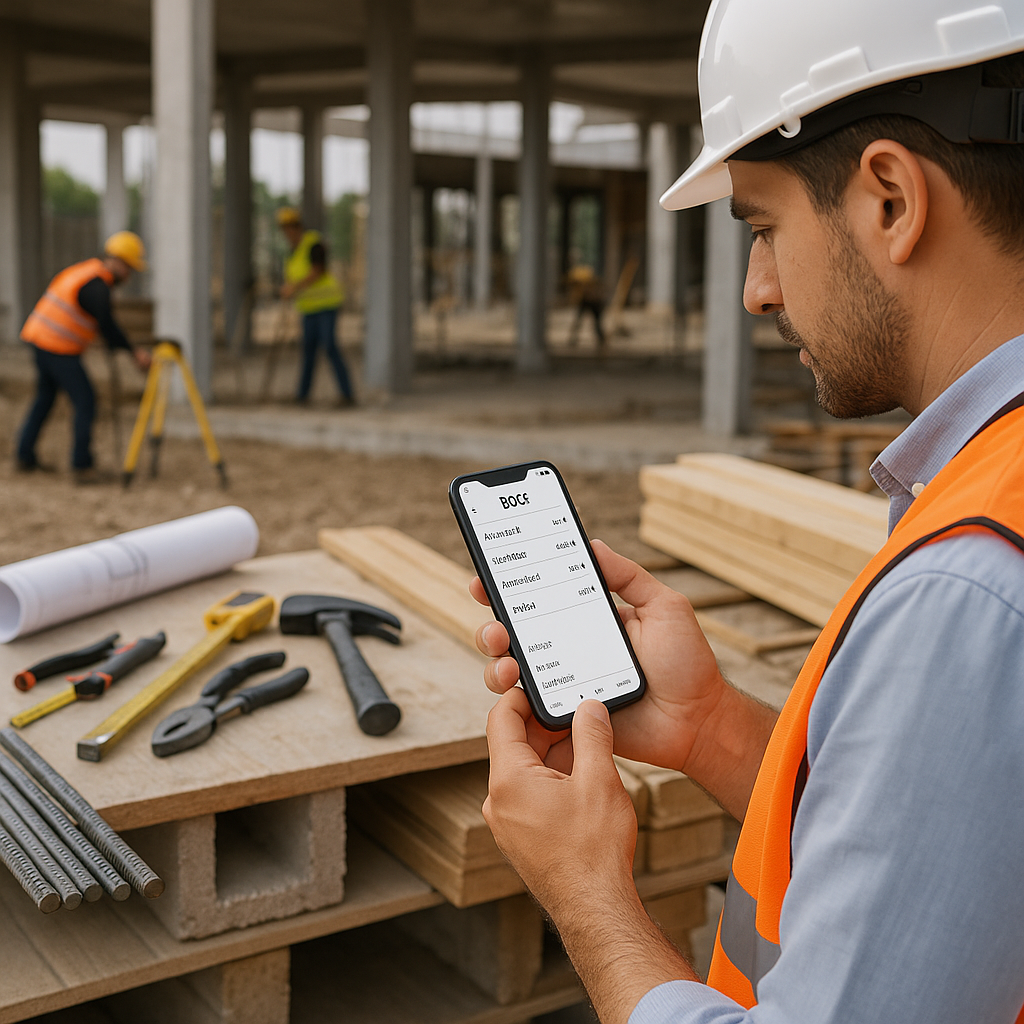
BidNext’s Enquiry & BOQ Builder lets you create BOQs line by line while standing on-site. Need to update quantities or rates? Do it on your phone. Got an Excel file from a client? Upload it straight from your email. Everything syncs directly into JobNext ERP, cutting out the double data entry.
Real-World Example: Dubai Road Construction Firm
For example, a Dubai-based road construction firm used this approach to win a $4 million tender. Previously, their BOQs lacked the granularity clients demanded. With BidNext, they not only reduced errors by 80% but also delivered a visually detailed BOQ that sealed the deal. The contractor saved 16 hours per tender and boosted conversion rates by 25%. Source: BidNext Blog
Why Real-Time Matters
Building BOQs on-site isn’t just about speed. It’s about precision. When your field team enters details while the scope is fresh, you avoid the common pitfalls of incomplete or inaccurate data. This can be the difference between winning a tender and losing out.
Example: Spotting Errors in Real Time
Here’s another scenario: Imagine your supervisor is on-site, capturing material requirements and manpower needs. They spot a discrepancy—say, a missing QHSE compliance line. With real-time tools, they can fix it immediately. No back-and-forth with the office. No delays.
The Approval Process Advantage
And let’s not forget the approval process. BidNext’s built-in workflows allow field teams to request approvals for their surveys and quotes instantly. Notifications keep the pipeline moving, even when decision-makers are traveling. For example, a facilities management company in Singapore reduced approval delays by 40%, ensuring faster submission of bids.
The ROI of Faster Tender Turnarounds
Speed wins tenders. Research shows that most contractors lose out because their quotes take 3-5 days to prepare. Why? Gathering site data, returning to the office, entering it into an ERP, generating a PDF, and finally emailing it—it’s a painfully slow process.
Case Study: Faster Quoting Equals Tender Success
BidNext slashes this timeline to hours. A contractor using BidNext can capture site data, build a BOQ, and generate a quote in the same day. In one case, this reduced quoting time by 75%, helping the contractor win 25% more tenders in a single quarter. Source: BidNext Blog
Actionable Steps to Improve Tender Turnaround
- Adopt Real-Time BOQ Tools: Equip your field team with tools like BidNext.
- Standardize Data Collection: Use templates to ensure consistent inputs.
- Automate Quote Generation: Sync BOQs directly into your ERP.
- Track Metrics: Monitor KPIs like turnaround time and tender win rate.
Overcoming Field Team Resistance
You might be thinking, "Sure, this sounds great, but my team isn’t tech-savvy." Fair point. Many field teams resist new tools, especially if they’ve been using spreadsheets for years. But here’s the thing: BidNext is designed for simplicity. If your team can use WhatsApp, they can use this.
Breaking Down Barriers
- User-Friendly Design: BidNext’s interface is intuitive. Entering data is as simple as typing into a chat window.
- Offline-Ready Architecture: No connectivity? No problem. BidNext syncs data automatically when back online.
- Training Programs: A solid Bid and Tender Management course should include hands-on sessions with tools like BidNext. By integrating mobile tender tools into your training, you can ensure your team not only understands the theory but can also apply it in real-world scenarios.
Example: Successful Adoption in Remote Areas
A construction firm operating in rural India faced significant connectivity issues. After adopting BidNext, their field teams could prepare BOQs offline and sync data when returning to the regional office. Within three months, their win rate improved by 18%.
Comparison Table: Traditional vs. Real-Time BOQ Creation
| Feature | Traditional Workflow | Real-Time BOQ Creation |
|---|---|---|
| Data Entry | Manual, error-prone | Automatic and synced |
| Timeline | 3-5 days | Same-day |
| Approval Process | Delayed due to email chains | Instant, app-based notifications |
| Error Rate | Higher due to manual processes | Significantly reduced |
| Connectivity Dependency | Requires consistent internet connection | Offline-ready architecture |
| Tender Win Rate | Lower due to inefficiencies | Higher due to faster submissions |
Common Objections (and How to Address Them)
1. "I already have an ERP system."
Great! BidNext isn’t here to replace your ERP. It’s a companion app that seamlessly syncs with platforms like JobNext ERP. Think of it as the mobile extension your ERP has always needed.
2. "What about connectivity issues?"
No problem. BidNext’s offline-ready architecture ensures your team can work uninterrupted. Data syncs automatically when the connection is restored.
3. "Is this just another app I’ll end up abandoning?"
That’s a valid concern. Many apps promise the world but fail in execution. BidNext is different because it’s built specifically for contractors and integrates directly with your existing workflows. Plus, real-world results speak for themselves—faster quotes, fewer errors, and higher win rates.
Final Thoughts
Winning tenders isn’t just about having the lowest bid. It’s about being reliable, accurate, and fast. Real-time BOQ creation is no longer a luxury—it’s a necessity. If your field teams are still stuck in the old way of doing things, you’re leaving money on the table.
BidNext is the tool to bridge that gap. It’s not just an app; it’s a game plan for contractors who want to compete—and win—in today’s fast-paced market.
Learn more at JobNext.ai - Construction ERP